12 hr
Caral Archaeological Site Day Trip from Lima
- Expert local guide
- Small group
- Skip-the-line access
- Free cancellation
Lima To Caral Tour — Supe Valley Entry & Guided Routes
Five thousand years of adobe, one desert morning of walking.
Compare fares, pick the fit — all bookings are mobile-voucher and eligible for free cancellation where shown.
12 hr
11 hr
12 hr
| Experience | From | Duration | Rating | Transfers | Pickup | Guide | Price | |
|---|---|---|---|---|---|---|---|---|
|
Guided Experience
Most popular
Caral Archaeological Site Day Trip from Lima
|
Lima | 12 hr | ★ 4.8 | ✓ | ✓ | ✓ | €120 | Book → |
|
Luxury / Private
Private Caral Archaeological Site Day Trip from Lima
|
Lima | 11 hr | ★ 4.5 | ✓ | ✓ | ✓ | €186 | Book → |
|
Guided Experience
Caral Sacred City Full-Day Excursion from Lima
|
Lima | 12 hr | ★ 5.0 | ✓ | ✓ | ✓ | €151 | Book → |
Worth it for history-minded travelers, not casual sightseers
A lima to caral tour asks for a full day and roughly four hours of driving each way through the Supe Valley, Barranca Province, and that effort is the real price — the gate itself costs only 11 PEN per person. What you get for it is the oldest urban center in the Americas: six earthen pyramids, sunken circular plazas, and residential terraces built by a Norte Chico civilization that raised monuments without pottery, without weapons, and without walls. The UNESCO site is open 09:00–17:00 daily, and arriving between 09:00 and 11:00 keeps the desert heat manageable. Guided Caral day trips from Lima usually bundle transport and interpretation, which matters here because the ruins are subtle rather than photogenic. If you want context for Andean archaeology, it pays off. If you want scale and drama on the level of Machu Picchu, it will not.
Bottom line: Book the Lima to Caral tour tickets if 5,000-year-old urban history genuinely moves you — otherwise spend the day elsewhere.
Hand-picked experiences loved by thousands of travelers
12 hours
Free Cancellation
Journey to America's most ancient city, then explore Lima's artistic bohemian neighborhood
1 day
Free Cancellation
Journey to South America's oldest known city and explore the ancient ceremonial heart of Peru's first civilization
12 hours
Free Cancellation
Journey to the Americas' oldest civilization, explore UNESCO-listed pyramids, and trek desert landscapes
1 day
Free Cancellation
Journey to America's oldest city and explore 5,000-year-old pyramids in Peru's Sacred Valley
13 hours
Free Cancellation
Journey to the Americas' most ancient city on this exclusive guided expedition with coastal scenery
1 day
Free Cancellation
Discover Peru's ancient coastal civilizations on this full-day journey to 5,000-year-old ruins
11 hours
Free Cancellation
Journey to Peru's ancient coastal civilizations and discover 5,000-year-old pyramids in the Americas' first city
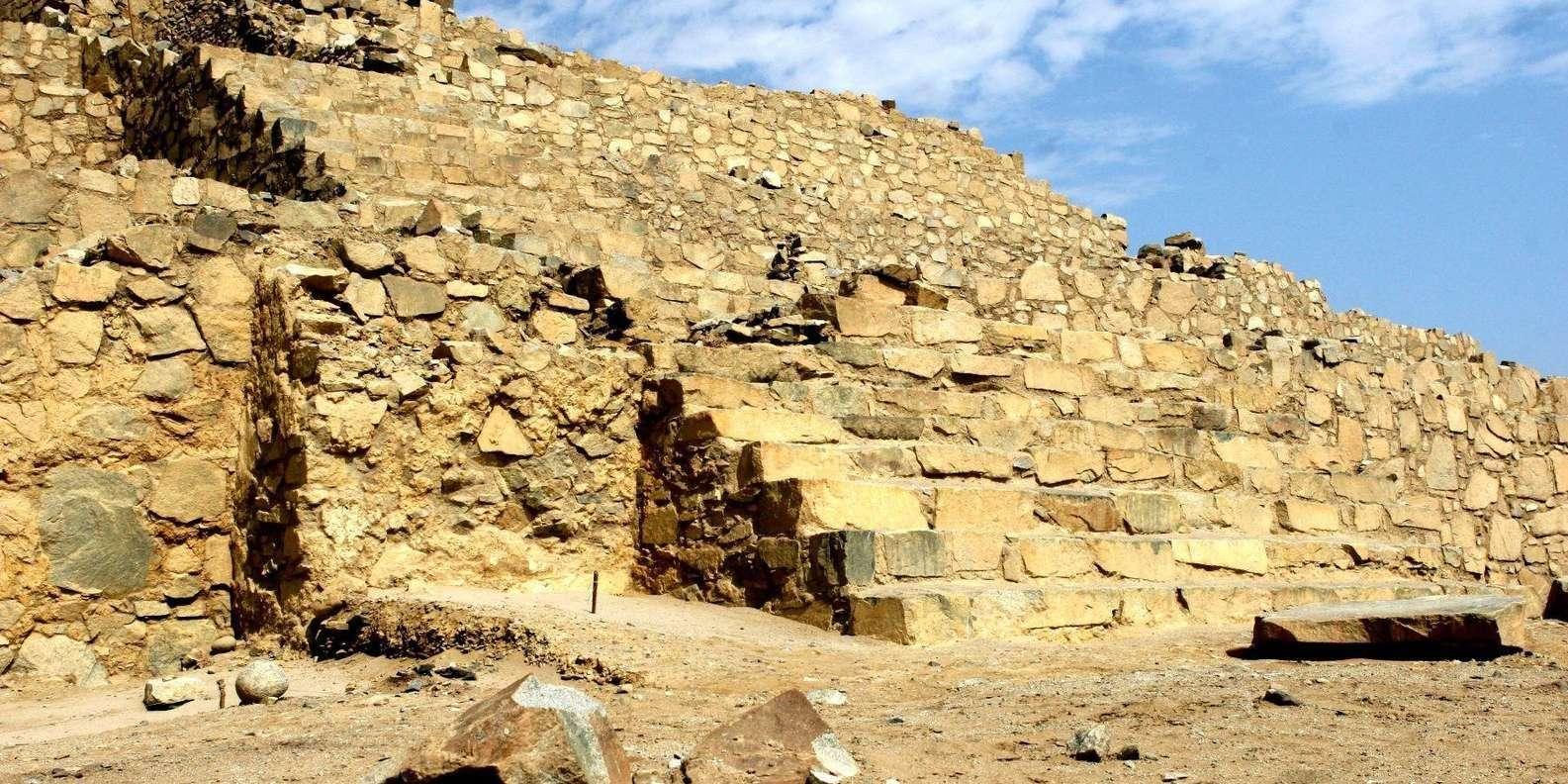
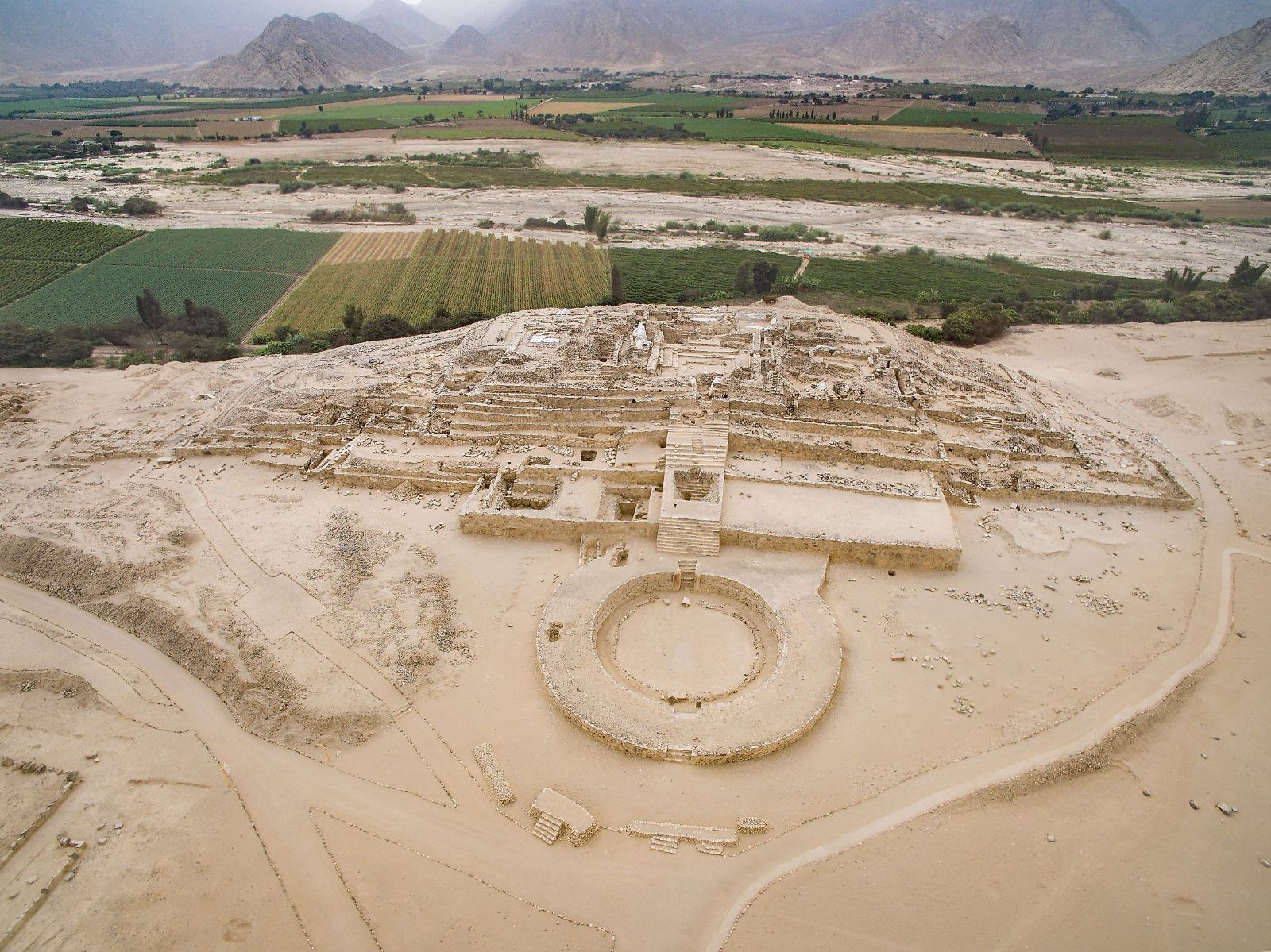
Rising 28 meters high, this is the most imposing structure at the site with a grand central staircase.
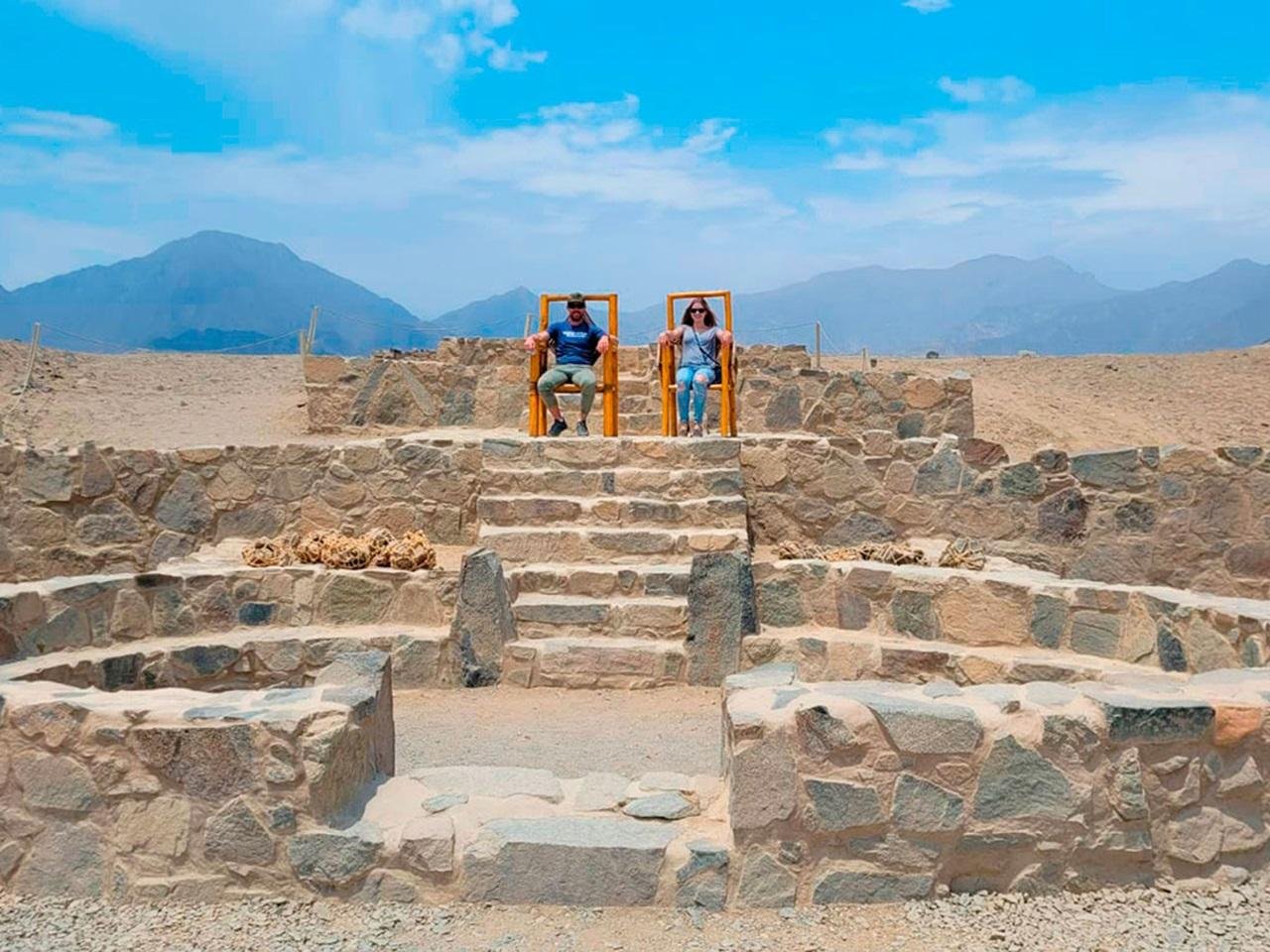
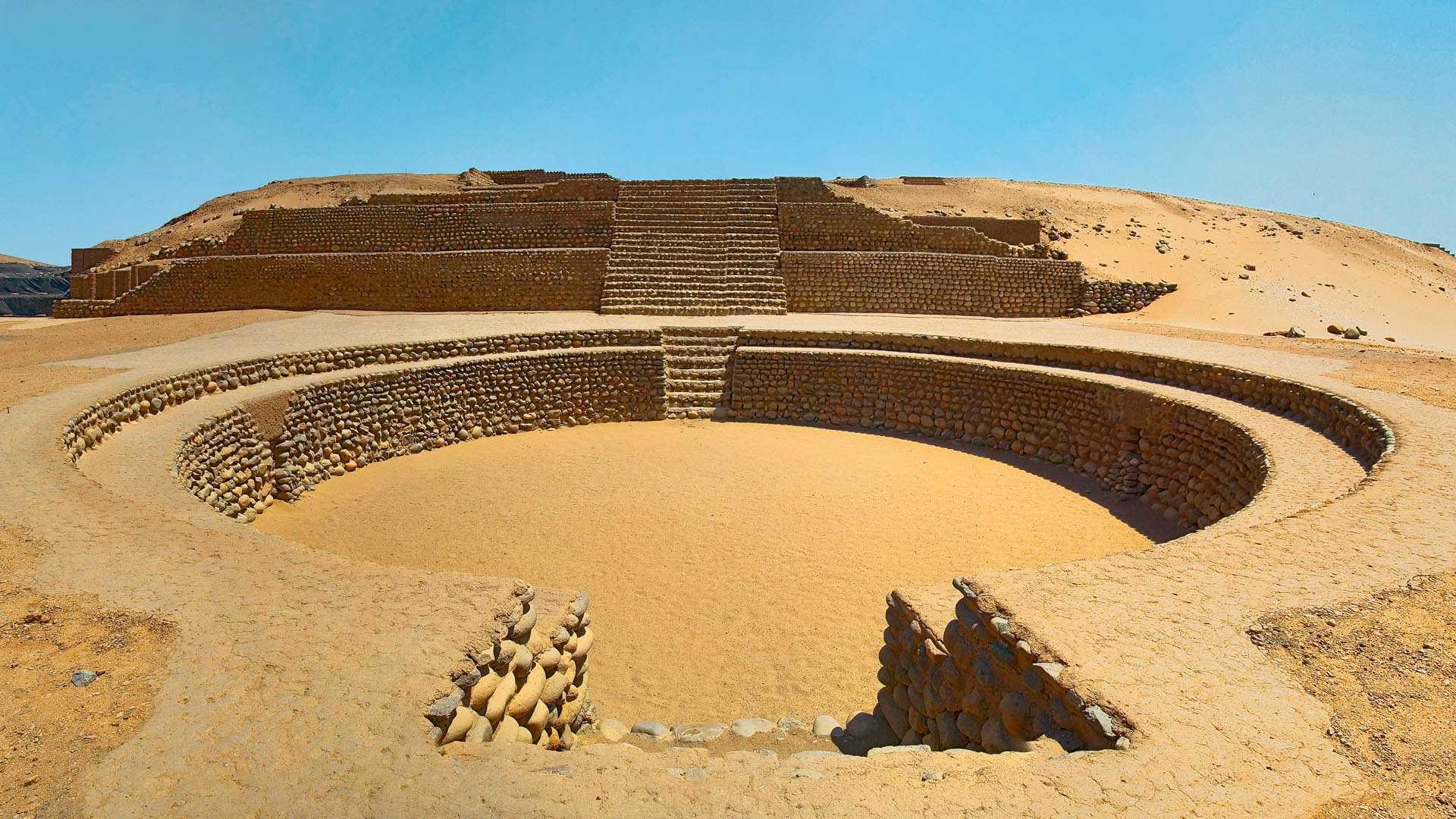
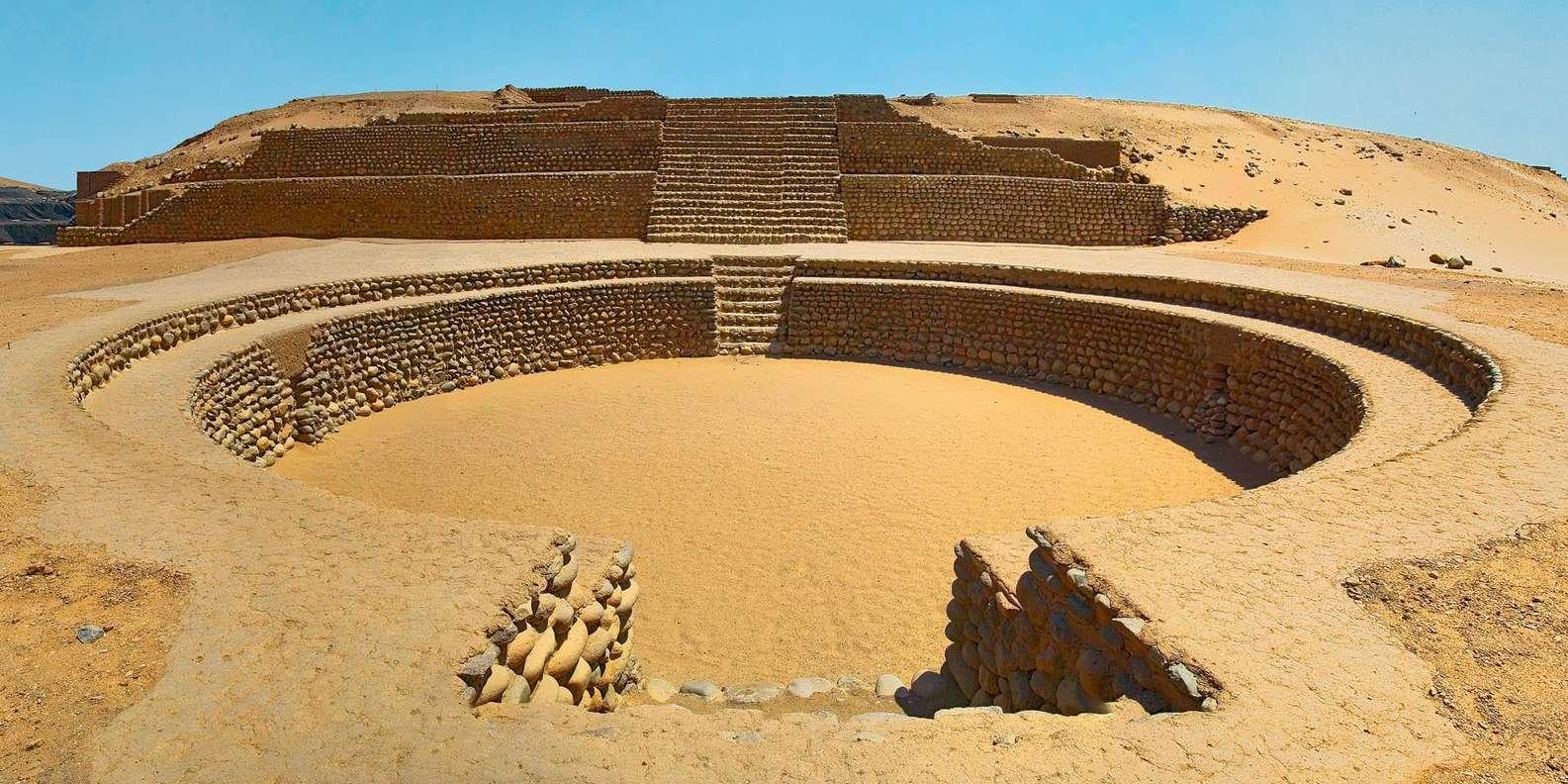
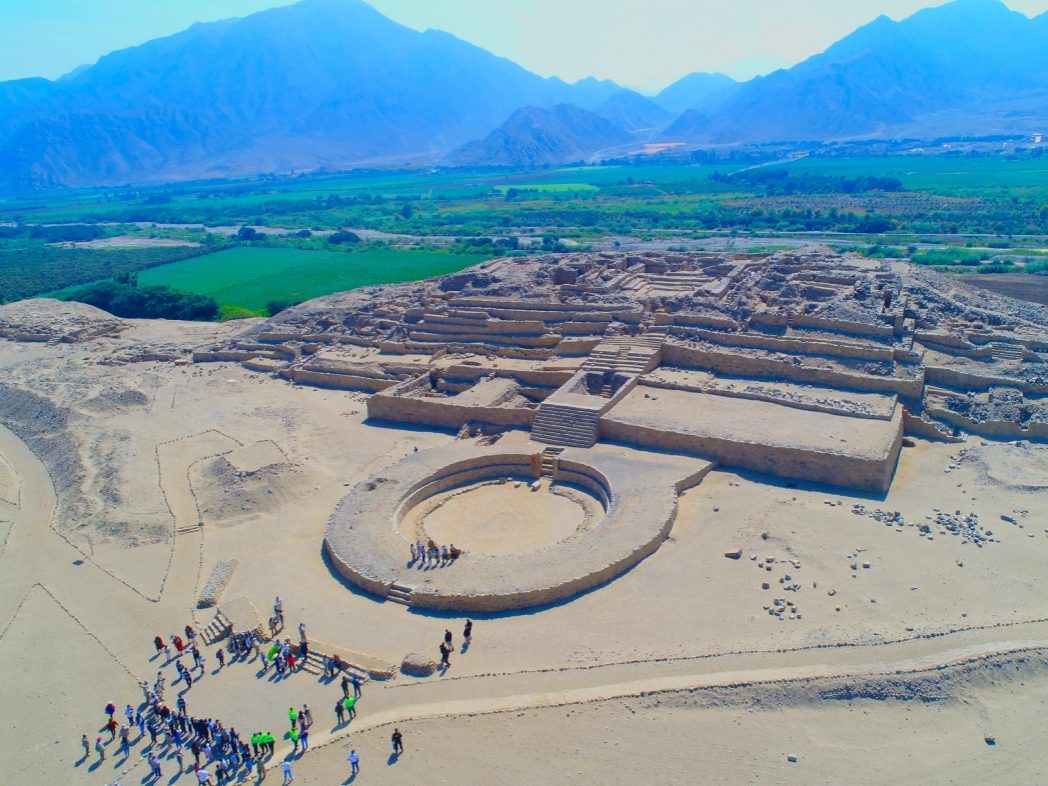
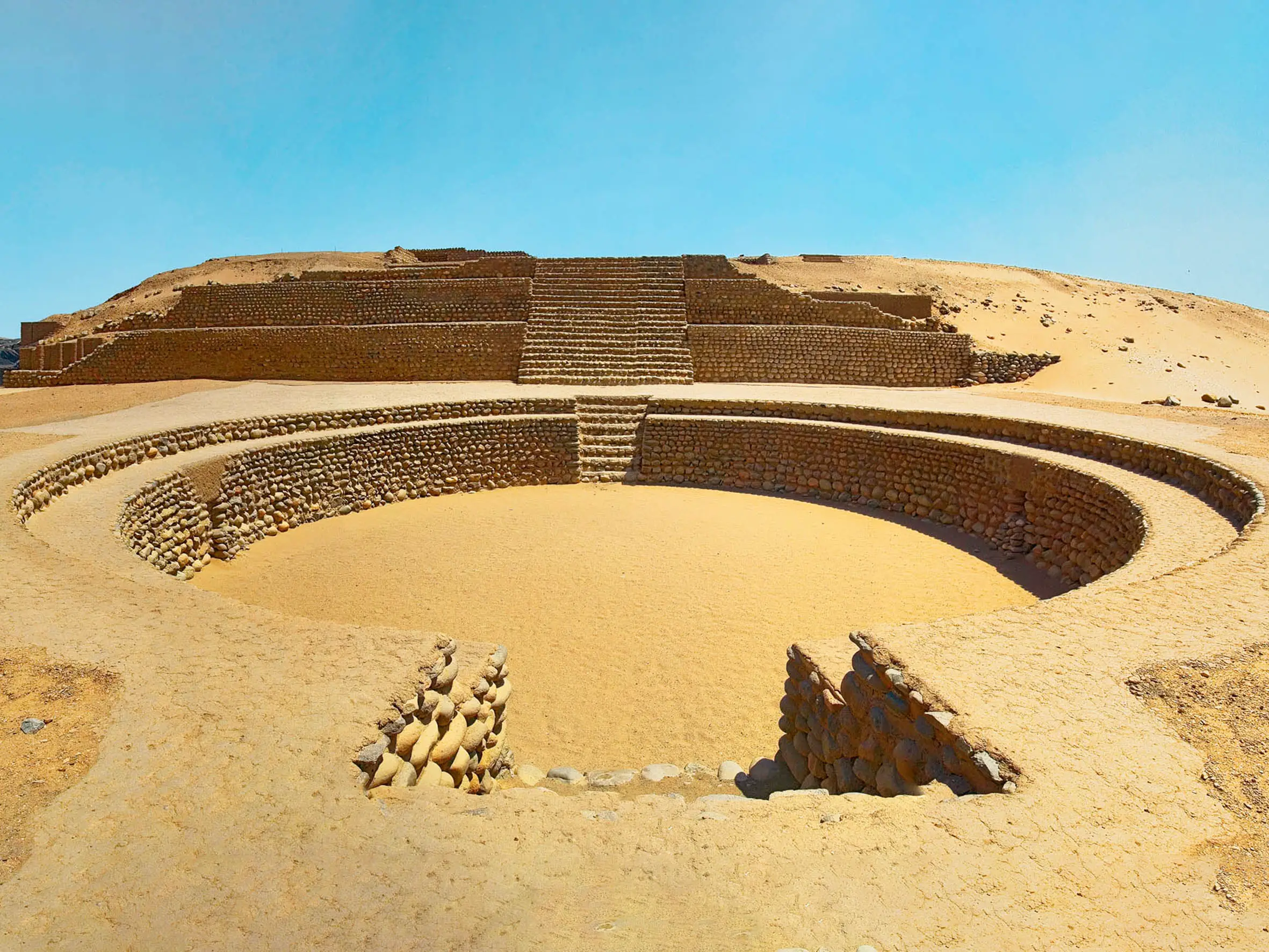
These sunken ceremonial courts were central to religious gatherings and community life in this ancient city.
This ceremonial complex features concentric terraces and was the site where 32 musical flutes were discovered.
A strategic standing stone used by the civilization to track solstices and equinoxes for agricultural planning.
The city was divided into zones, with elite dwellings located near the temples and other structures for common workers.
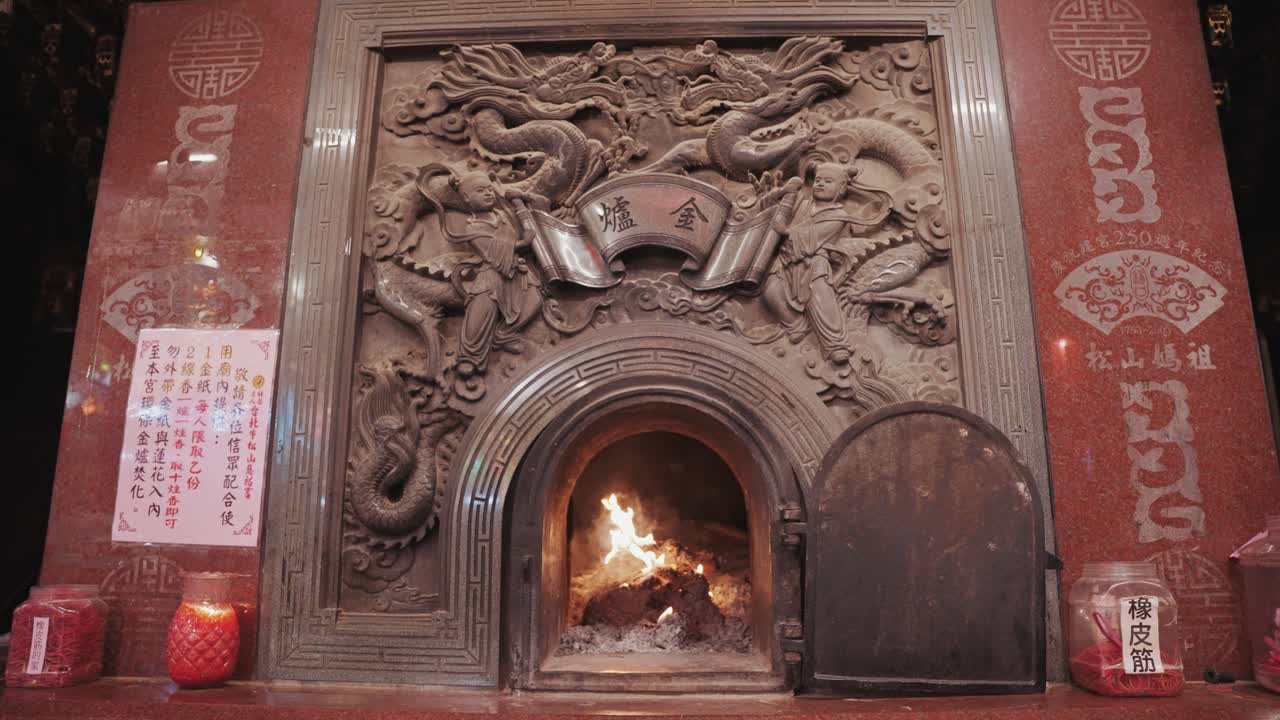
This structure utilized underground ducts and the Venturi effect to fan fires, an advanced technique for its time.
You leave Lima before dawn, because the desert light is best early and a lima to caral tour tour covers roughly 180 kilometres of Panamericana Norte before the day turns hot. The bus crosses the Chancay and Huaura valleys, then turns inland at Barranca onto a gravel access road that runs beside the Supe River.
Gates open at 09:00, and the recommended arrival window of 09:00–11:00 keeps you ahead of peak heat. You pay 11 PEN, sign the visitor register, and step onto the marked circuit.
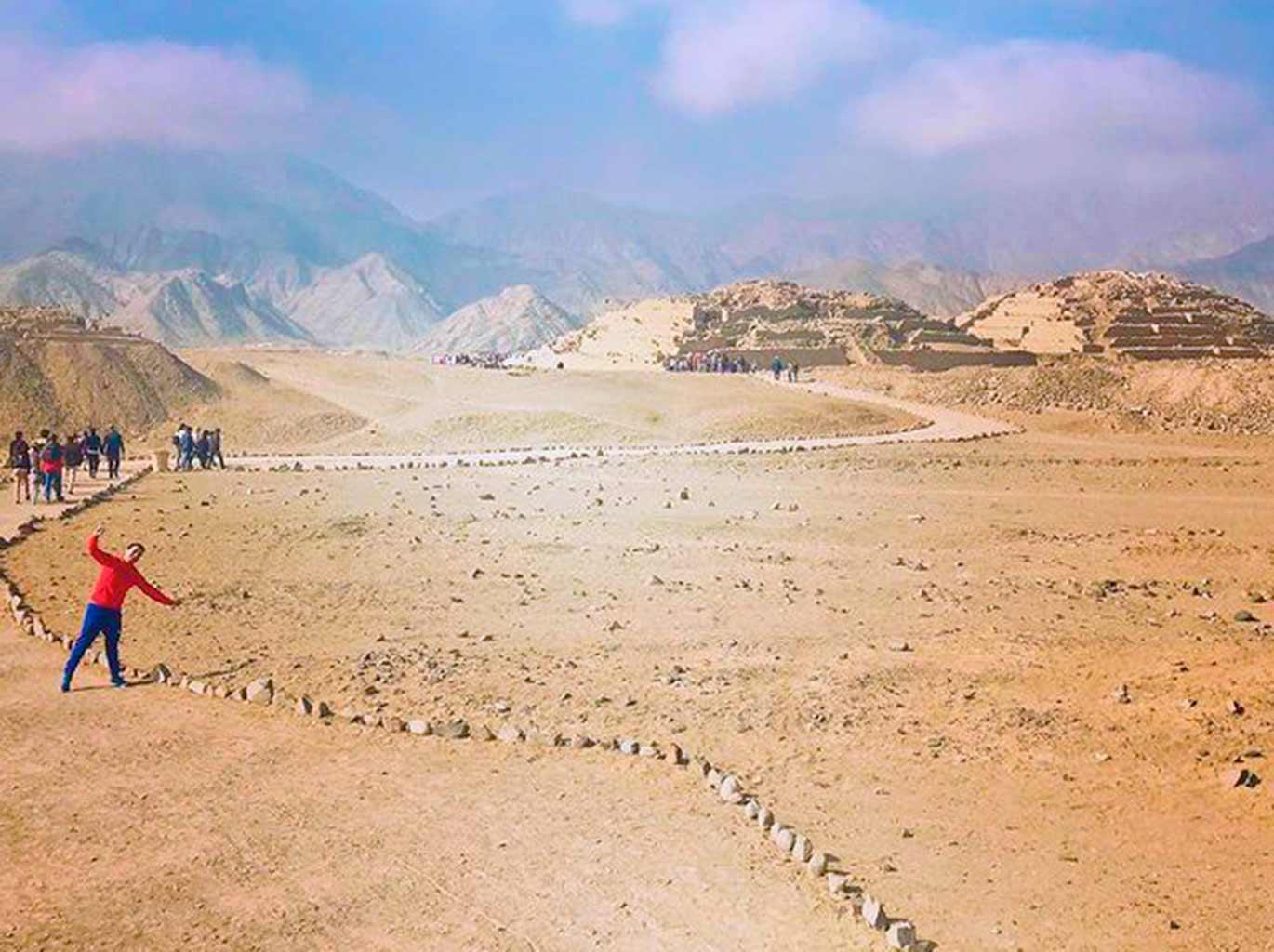
You walk the ruins in a loop, not a line. Sand crunches underfoot. You pause at the sunken circular plaza, stand at its centre, and hear your own voice return off the terraces. You climb the switchback ramp of the Pirámide Mayor, count the platform tiers, and look south across the valley to fields of sugarcane and ají. Guides speak in Spanish and English; the full circuit runs several kilometres of level ground with almost no shade.
After the pyramids you drift into the site museum for the flutes, the quipu, and the cotton fragments. Travellers comparing routes — many arrive still wondering how long to drive from lima to cusco — find this northern coastal trip far simpler. The zone closes at 17:00. You board the bus, and the pyramids shrink into ochre against a paling sky.
All the details about your upcoming adventure in one place
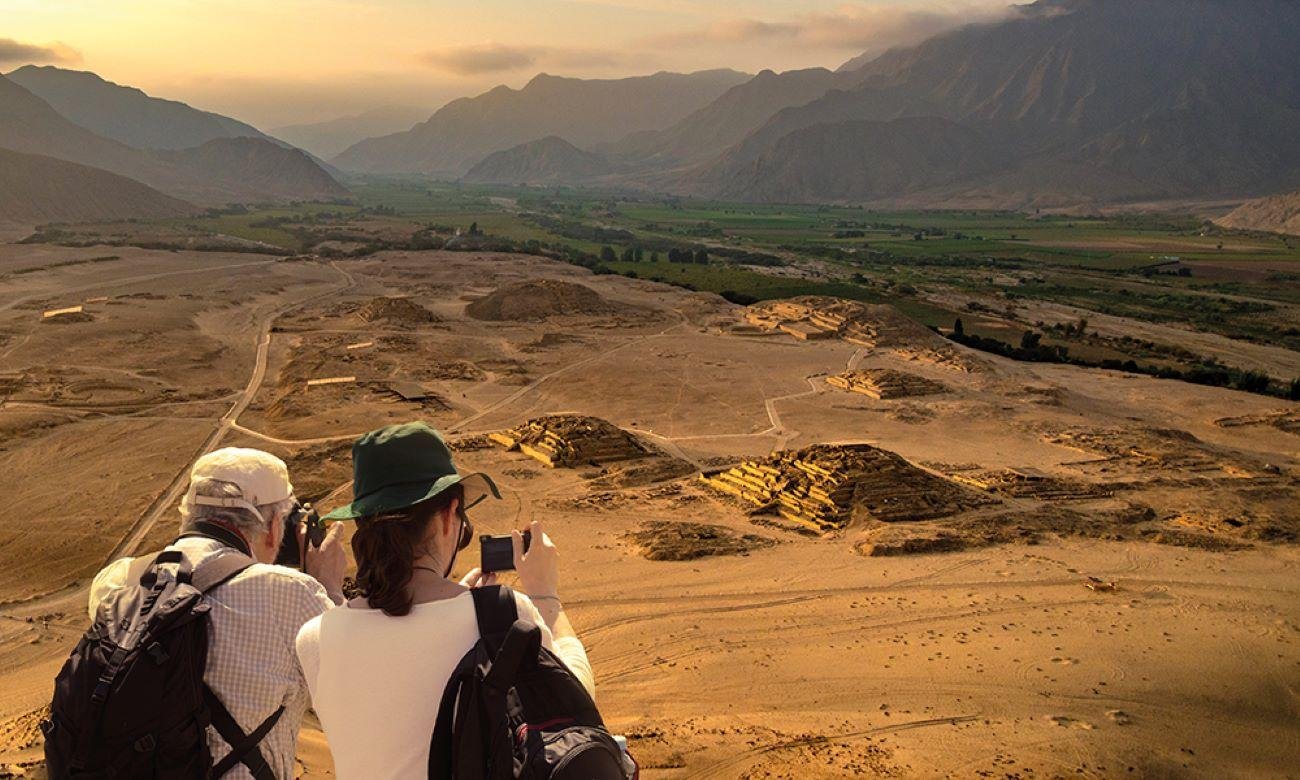
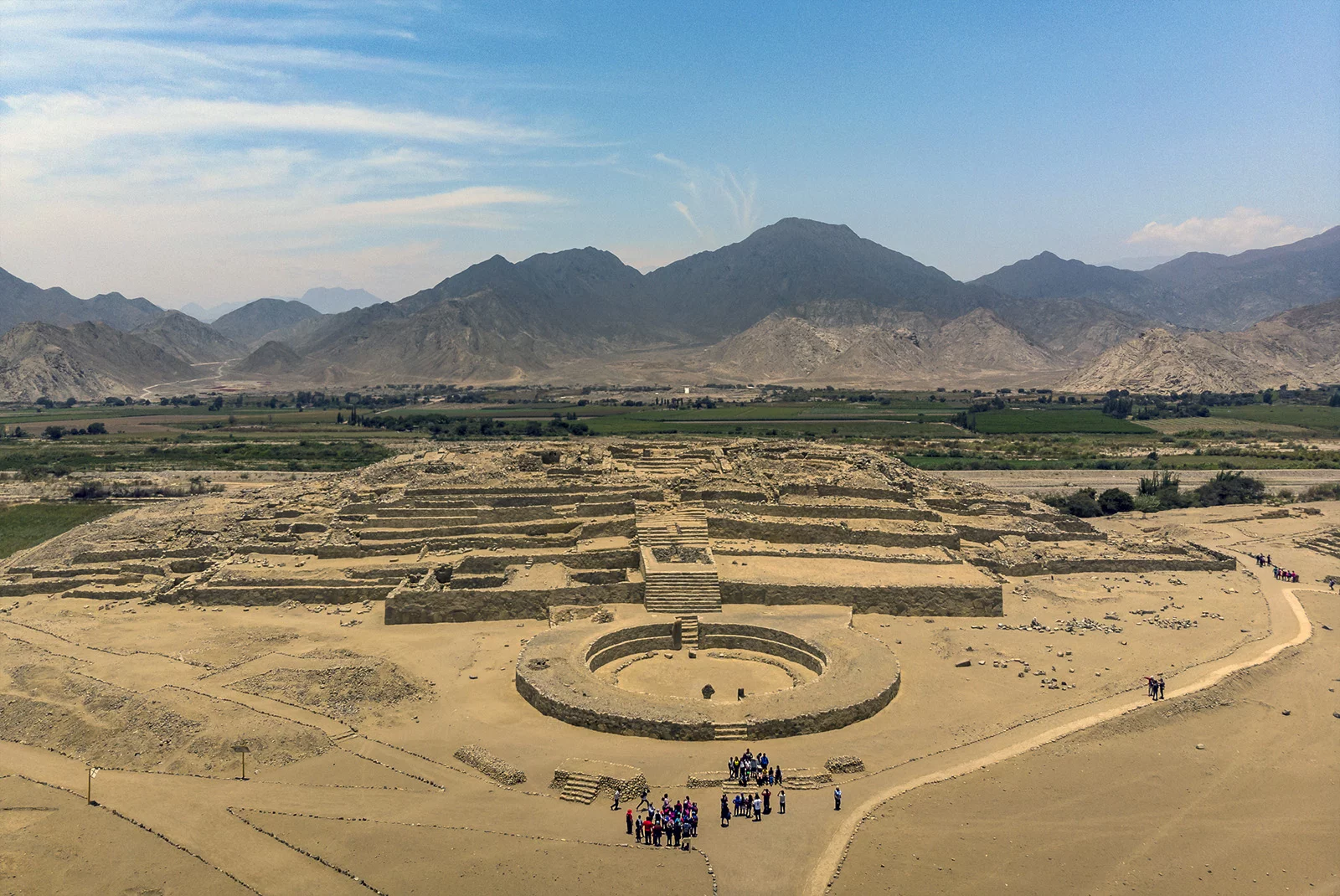
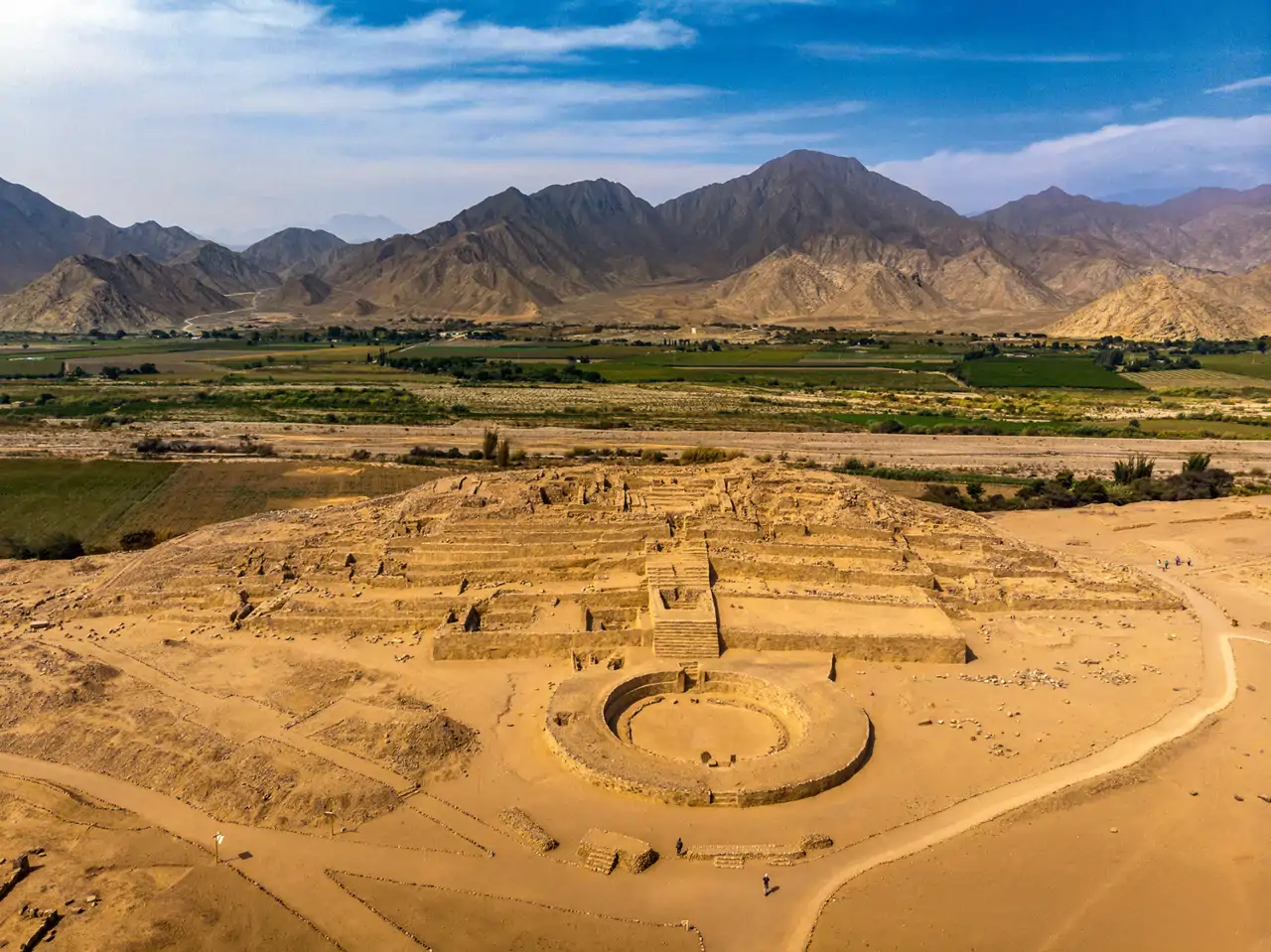
A lima to caral tour trades the coastal highway north for the Supe Valley, where earthen pyramid mounds and a sunken circular plaza sit against bare desert hills. Zona Arqueológica Caral, inscribed by UNESCO, is among the oldest urban centres in the Americas, and its ceremonial platforms, quipu finds and amphitheatre are read from raised walkways rather than climbed. Most lima to caral tour tours pair the ruins with the coastal settlement of Áspero, and bilingual guiding is standard on a tour a Caral desde Lima.
Caral was built before the wheel reached the Americas, before ceramics, and before writing — yet its architects raised six stone-and-adobe pyramids across 66 hectares of desert terrace.
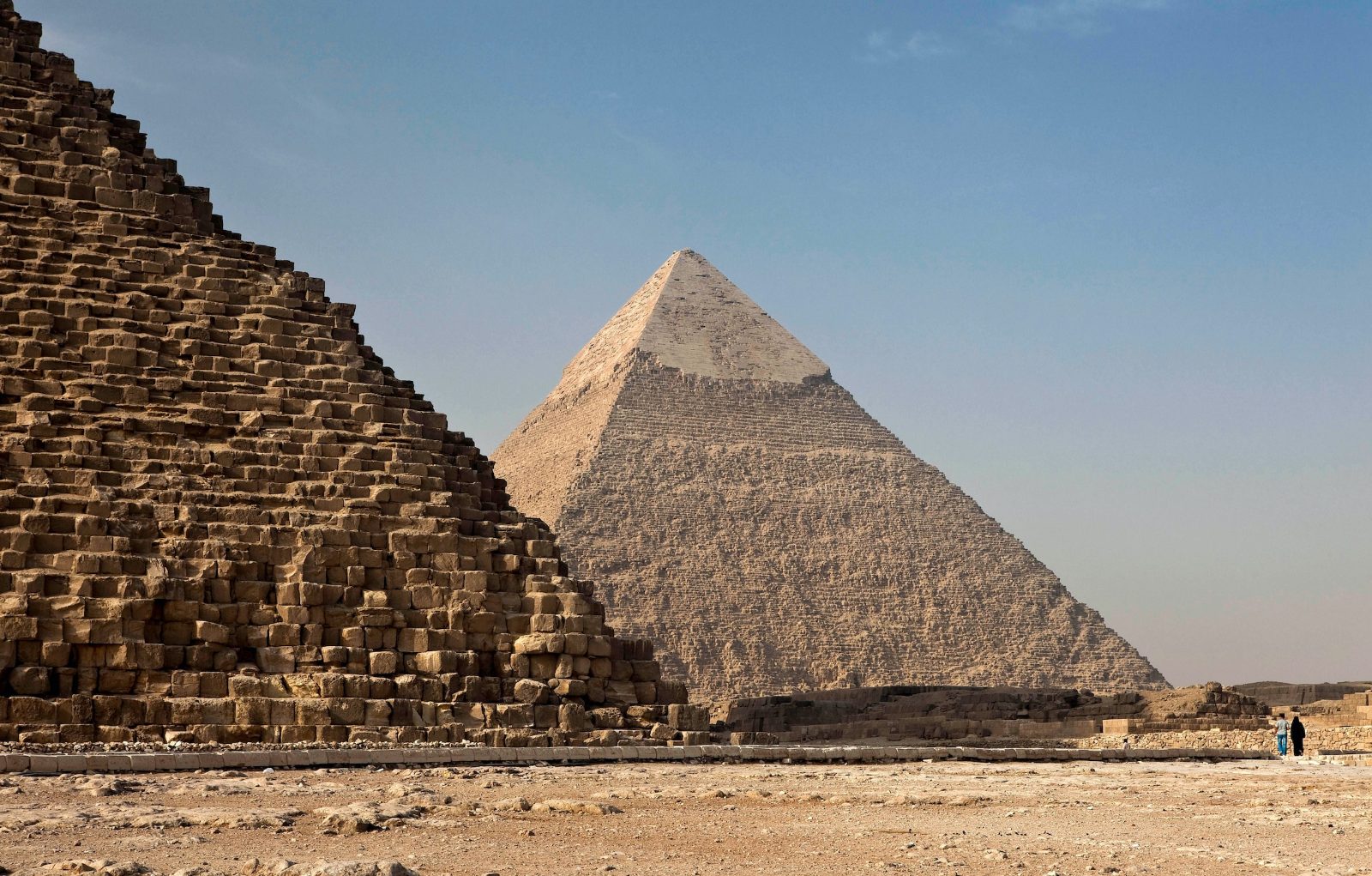
Radiocarbon dating places construction around 2600 BCE, contemporary with the pyramids at Giza and roughly two millennia ahead of the Olmec. The site sits in the Supe Valley, Barranca Province, Lima Region, Peru, on a dry bluff above a green ribbon of irrigated fields. A well-planned lima to caral tour reaches it in roughly three hours from the capital, tracking the Panamericana Norte through fishing towns and cotton country.
What distinguishes the Sacred City is what it lacks. Excavations led by archaeologist Ruth Shady from 1994 onward have produced no fortifications, no weapon caches, no evidence of violent destruction. Instead the record yields quipu cords, thirty-two flutes carved from pelican and condor bone, cotton nets, anchovy bones traded up from the Pacific, and Amazonian seeds carried across the Andes. Norte Chico civilization appears to have organized itself around commerce and ceremony rather than conquest — a proposition that reshaped how scholars date the emergence of urban life in South America. UNESCO inscribed the Sacred City of Caral-Supe as a World Heritage Site in 2009.
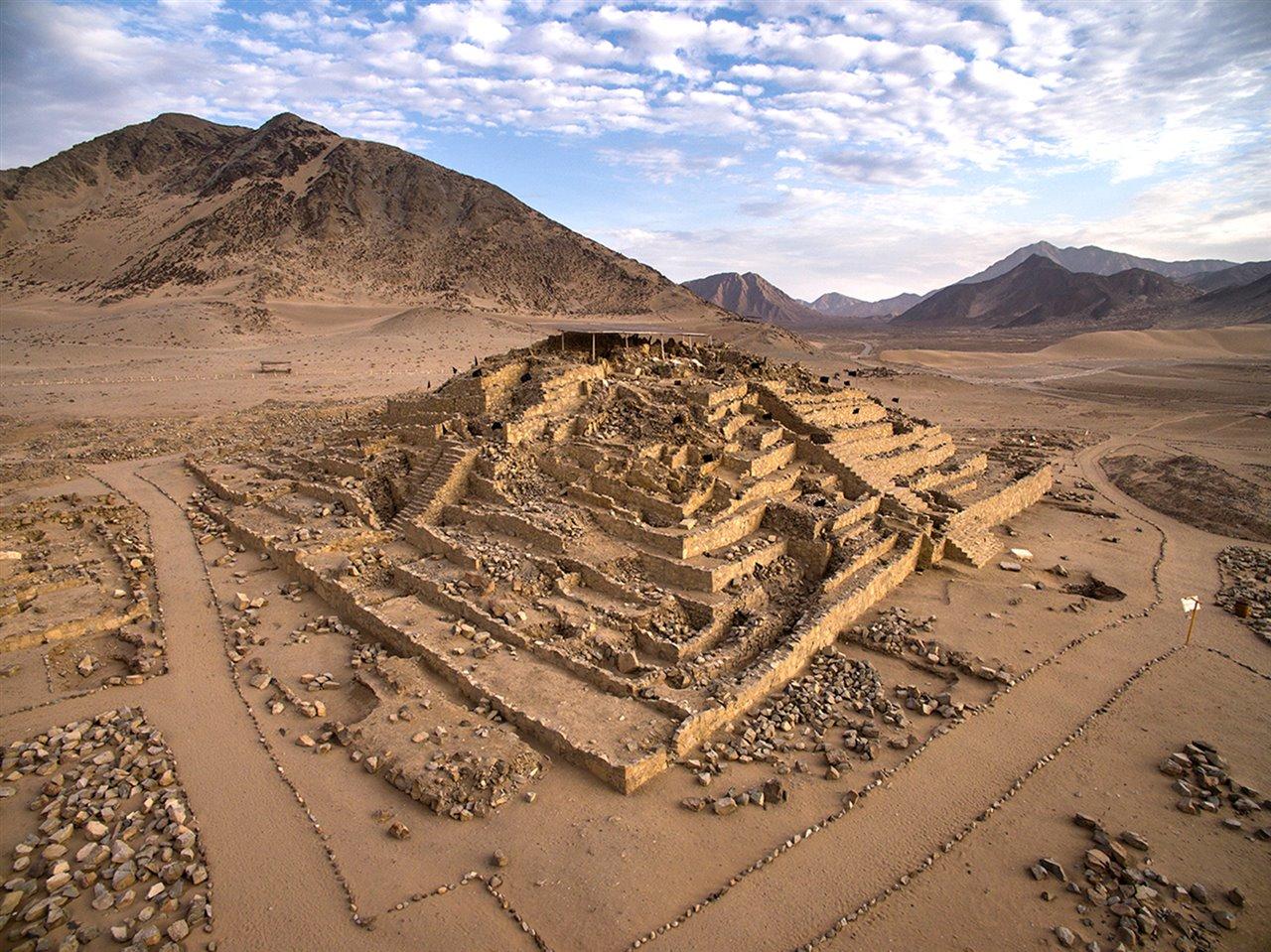
The architecture rewards slow attention. The Pirámide Mayor rises about 18 metres and covers ground equivalent to four football pitches, its stepped platforms fronted by a sunken circular plaza where sound carries with unusual clarity. Nearby, the Templo del Anfiteatro holds a second amphitheatre and the altar where the bone flutes were recovered. Builders used shicra — reed bags packed with quarried stone — as seismic ballast, a technique that has held these walls upright through five thousand years of tremors. Residential compounds ring the ceremonial core, their scale suggesting a resident population near three thousand.
Practical curiosity often precedes the visit. Travellers planning a broader Peruvian itinerary ask how long does it take to drive from lima to cusco, is it safe to drive from lima to cusco, and can you drive from lima to cusco — questions that matter less here, since Caral sits north of the capital on paved coastal highway rather than along the southern Andean route. Guided lima to caral tour tours generally pair the archaeological zone with the site museum and its collection of textiles and figurines. Independent Caral day trips and Barranca excursions cover the same ground at a different pace, and lima to caral tour tickets carry a general entrance fee of 11 PEN per person.
No fortifications, no weapons, no burned layer — Caral organized five thousand people around ceremony rather than conquest.
Wear comfortable, breathable clothing suitable for an arid desert environment. A wide-brimmed hat and sturdy walking shoes are essential for navigating the unpaved paths of this ancient landmark.
Small daypacks are recommended as there are no lockers for large luggage. Expect standard security checks upon entering the archaeological zone.
Photography is permitted for personal use throughout the site. Respect all cordoned-off excavation areas to preserve the integrity of the ruins.
The site is an educational experience for children interested in history. Be aware that the lack of shade and extensive walking might be challenging for very young children.
The terrain consists of natural, uneven desert surfaces. While some sections can be accessed by wheelchair with assistance, the rocky paths require significant caution.
There is no restaurant service inside the park. A covered picnic area is available, so bring sufficient water and light snacks, disposing of all waste responsibly.
Opening hours
09:00–17:00 daily
Address
Supe Valley, Barranca Province, Lima Region, Peru
Accessibility
Some paths are rocky, caution advised for wheelchair users
Best arrival
09:00–11:00 for milder temperatures
Storage
Not available on-site
Official site
http://www.zonacaral.gob.pe/
Car · Public transport · Take a bus from Lima to Barranca, then hire a local taxi to reach the site entrance.
Follow the Panamericana Norte to kilometer 184, then take the local detour.
Many operators offering a lima to caral tour provide free cancellation up to 24 hours in advance. Always confirm terms regarding the 11 PEN general entrance fee per person when booking.
Recommended time
2-3 hours
A typical lima to caral tour requires enough time to navigate the extensive Supe Valley archaeological site, where visitors explore the central plaza and various monumental platforms. Planning your lima to caral tour tours within the best arrival window of 09:00–11:00 is essential to avoid peak heat and ensure a comfortable pace through the desert landscape. While securing lima to caral tour tickets is straightforward, the primary constraint remains the travel time from the capital, so allocating a full morning allows for a thorough experience of this UNESCO heritage landmark.
Crowd levels through the day
Weather · crowds · average price — dots go green to amber to red as each metric rises.
Mild temperatures make walking the site very comfortable during these months.
The mandatory site tour is best supplemented by a local expert who can explain the complex history of the Norte Chico civilization.
Supe Valley, Barranca Province
Look for the official archaeological site signage.
Get directionsThe Sacred City of Caral rose in the Supe Valley around 3000 BCE. It is the oldest known urban centre in the Americas. Its pyramids were under construction while Egypt raised its own. No fortifications have been found. No weapons. No mutilated bodies. That absence shapes every serious account of the site, and it is the first thing a lima to caral tour should explain: this was a society organised by exchange and ritual rather than conquest. The archaeologist Ruth Shady Solís began systematic excavation in 1994 and published radiocarbon dates in 2001 that fixed occupation between roughly 2900 and 1800 BCE. Her team identified six major pyramidal mounds. The largest, the Pirámide Mayor, covers nearly the footprint of four football fields and rises about 18 metres. Builders used shicras — woven reed bags filled with stone — packed into retaining walls. The technique absorbed seismic movement, an engineering answer to Peru's earthquakes devised five millennia ago. The sunken circular plazas served assembly and ceremony. A knotted quipu recovered here pushed Andean record-keeping back thousands of years. Controversy has followed the discovery. Priority disputes over who first dated the site, and later legal battles over land encroachment by squatters and agricultural interests, occupied Shady for years; she survived an armed attack at the site in 2003. UNESCO inscribed Caral as a World Heritage property in 2009, citing its exceptional testimony to early Andean civilisation. Excavation continues under the Zona Arqueológica Caral, and the official record is maintained at http://www.zonacaral.gob.pe/. The economy rested on irrigated agriculture — cotton, squash, beans — traded inland for anchovies and sardines from the Pacific coast twenty kilometres west. Cotton nets went seaward; dried fish came back. Residential quarters of differing size and quality indicate ranked social classes and a governing elite. Around 1800 BCE the valley was abandoned, probably under drought and shifting sands. Modern lima to caral tour tickets grant access to the excavated core, and the general entrance fee is 11 PEN per person at Supe Valley, Barranca Province, Lima Region, Peru. Many Lima landmarks tours reach the site, and a well-run Caral archaeological tour treats those five thousand years as the point.
Construction begins at Caral in the Supe Valley, making it the oldest urban centre in the Americas.
The Pirámide Mayor reaches roughly 18 metres using shicra bags of stone as seismic-resistant fill.
The city is abandoned, with drought and encroaching sand among the leading explanations.
German archaeologist Max Uhle surveys the Supe Valley and records mounds later identified as Caral.
Ruth Shady Solís begins systematic excavation of the site.
Radiocarbon results published in Science date occupation to roughly 2900–1800 BCE.
UNESCO inscribes Caral on the World Heritage List.
The Zona Arqueológica Caral continues excavation and conservation across the Supe Valley sites.
Real experiences from real travelers
We left Lima before sunrise and were standing in the Supe Valley by mid-morning, which is exactly when the light on the adobe terraces is best. Our guide explained the shicra reed bags used inside the platform mounds, and the fact that this civilization was contemporary with Sumer took a while to sink in. The lima to caral tour felt more like a lecture in the open desert than a bus ride, in the best way.
There were maybe twenty other people on the whole site, which after the crowds elsewhere in Peru was a relief. The sunken circular plaza is bigger in person than photos suggest, and the wind carries a fine dust that gets into everything, so bring a buff. Worth doing this Caral day trip if you want the Norte Chico story rather than another Inca stop.
Standing at the Altar of the Sacred Fire while the guide explained the underground ventilation duct was the moment the site clicked for me. Everything is beige and brown under a hard sun, so the terraced shapes only really read when the shadows lengthen. Good pick among Lima landmarks if you like archaeology over cathedrals.
The Panamericana stretch north is not scenic and the last section of road is rough, so set expectations. Once at the Ciudad Sagrada de Caral the scale of the six pyramid mounds against empty hills makes up for it. Our guide spoke clear English and knew the excavation history well.
I had never heard of the Norte Chico civilization before booking, and now I keep telling people about it. The guide pointed out the quipu found here and the flutes made from condor bone, and the small museum displays give context the open site cannot. Buying the lima to caral tour tickets in advance meant we skipped the ticket queue entirely at the entrance.
Mid-morning the valley wind picked up considerably and the fine sand made walking the raised paths a squinting exercise, so sunglasses are essential. The amphitheater and the residential sector at the edge of the complex were my favourite parts. Among the various lima to caral tour tours listed online, ours had the smallest group size, which mattered on a site where you want to hear the guide.
The Pirámide Mayor rises high enough that you get the whole Supe Valley layout from the viewpoint path beside it. Guide explained why the site has no fortifications or weapons, which is the detail I remember most. Everything is exposed desert, no shade beyond the entrance structures.
Le circuit Lima Caral was well organised and the driver stopped in Barranca for a proper meal on the way back. UNESCO listing is deserved, though the site is deliberately minimally reconstructed, so you are looking at excavated earth and stone rather than restored temples. Bring more water than you think you need.
If you want dramatic stonework this is not Machu Picchu, and some people in our group seemed to expect that. What you get instead is the oldest urban centre in the Americas explained properly on site by someone who knows the excavation. This lima to caral tour tour ran to schedule and we were back in Miraflores before dark.
Late afternoon on the platform mounds is very quiet apart from the wind, and the guide gave us ten minutes to just stand there without commentary. The contrast between the green irrigated fields below and the bare hills all around is striking from the high path. Practical note, the desert sun is stronger than the coastal grey of Lima prepares you for.
Everything you need to know for your journey
The site is open daily from 09:00–17:00.
General entrance to Caral is 11 PEN, but confirm with your operator if this is bundled into your tour price.
Yes, a guided experience is highly recommended to understand the complex history of this ancient landmark.
Arriving between 09:00–11:00 is ideal to experience the site before peak heat.
While the paths are natural and rocky, the site is generally accessible with caution.
You may bring snacks to the picnic area, but please carry all trash out of the archaeological zone.
Expect to spend several hours exploring the pyramids and plazas during your lima to caral tour.
Photography is allowed for personal use, provided you stay on designated paths.
Booking ahead is recommended, especially for small-group departures during the summer peak season.
Yes, many visitors combine their lima to caral tour with stops at Vichama or local coastal towns.
A sister site to the main city showing evidence of climate change survival.
Several established hotels providing basic comfort near the valley.
Join thousands of happy travelers who have discovered this incredible experience
Book Your Experience Now